

Your complete guide to experiencing some of the darkest skies in Texas, where the universe comes alive under a Bortle Scale 3 rating
Where the Stars Tell Their Stories
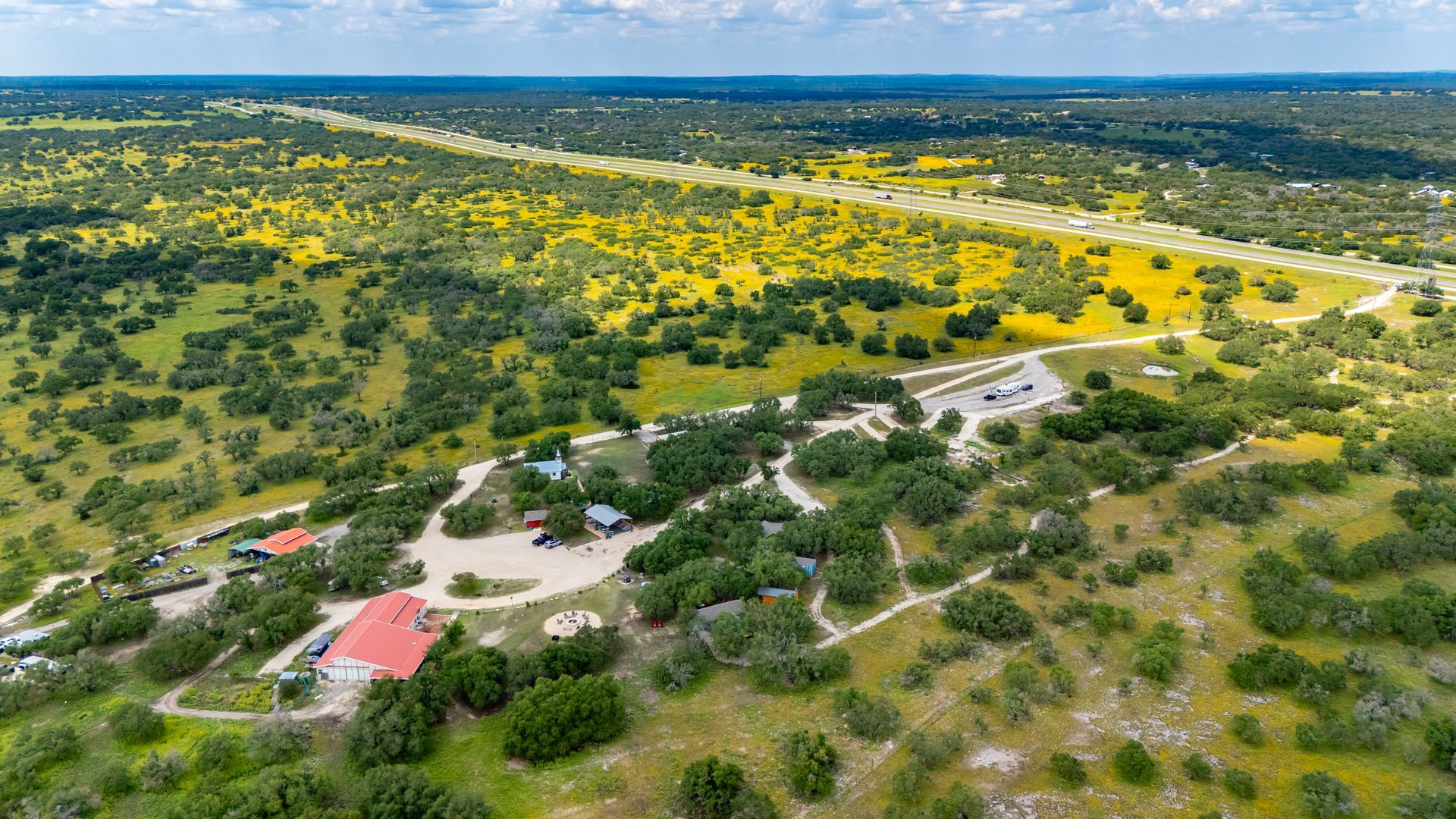
Nestled in the pristine wilderness of Mountain Home, Texas, Cowboys & Angels Retreat offers one of the most spectacular stargazing experiences in the American Southwest. Located just outside of Kerrville and about 120 miles west of Austin, our 50-acre sanctuary provides something increasingly rare in our modern world: true darkness. This makes Cowboys & Angels Retreat the premier destination for stargazing near Kerrville Texas, offering visitors an authentic astronomy camping Texas experience.
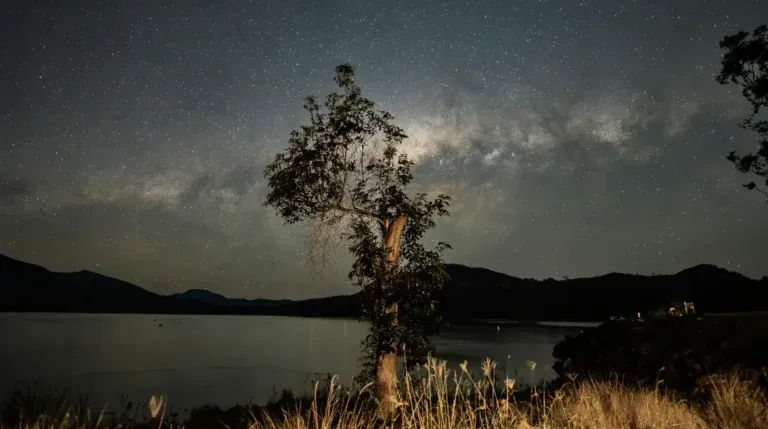
With a Bortle Scale rating of 3, our skies are so dark that on moonless nights, you literally cannot see your hand in front of your face. This exceptional darkness reveals celestial wonders invisible to most of the world’s population, making Cowboys & Angels Retreat a premier destination for astronomers, astrophotographers, and anyone seeking to reconnect with the cosmos.
Understanding Our Exceptional Dark Skies
The Bortle Scale Explained
The Bortle Scale measures night sky brightness from 1 (pristine dark sky) to 9 (inner-city light pollution). At Bortle 3, Cowboys & Angels Retreat offers:
- Naked-eye visibility of stars as faint as magnitude 6-7
- Crystal-clear Milky Way structure with visible dust lanes
- Easy viewing of faint nebulae, galaxies, and star clusters
- Optimal conditions for meteor shower observation
- Exceptional astrophotography opportunities
Why Our Location is Special
Geographic Advantages:
- Minimal light pollution from surrounding urban areas
- Expansive open horizons with unobstructed 360-degree views
- High elevation in the Texas Hill Country
- Dry climate with frequent clear nights
- Stable atmospheric conditions ideal for telescope viewing
Accessibility:
- Easy access from Highway I-10
- Just minutes from Kerrville amenities
- Close proximity to other Hill Country attractions like
Enchanted Rock State Natural Area and
Lost Maples State Natural Area
Seasonal Stargazing at Cowboys & Angels Retreat
Spring Stargazing (March – May)
What to Expect:
- Milky Way emergence begins in the eastern sky after midnight
- Prime constellations: Leo, Virgo, Boötes
- Moderate temperatures perfect for extended viewing sessions
- Longer nights transitioning from winter
Special Events:
- Lyrid Meteor Shower (mid-April)
- Eta Aquariid Meteor Shower (early May)
- Spring galaxy season with easy viewing of Virgo Galaxy Cluster
Summer Stargazing (June – August) PRIME SEASON
What to Expect:
- Peak Milky Way season with galactic core directly overhead
- Spectacular summer triangle of Vega, Altair, and Deneb
- Warm, comfortable nighttime temperatures
- Peak meteor shower season
Must-See Events:
- Perseid Meteor Shower (August 11-13) – up to 100 meteors per hour. Read our complete Perseid viewing guide.
- Summer Solstice celebrations
- Saturn and Jupiter at their most prominent
- Best astrophotography conditions of the year
Autumn Stargazing (September – November)
What to Expect:
- Early evening Milky Way visibility before it fades
- Prominent autumn constellations: Pegasus, Andromeda, Perseus
- Crisp, clear air with excellent visibility
- Comfortable temperatures for extended sessions
Special Events:
- Orionid Meteor Shower (October 21-22)
- Leonid Meteor Shower (November 16-17)
- Supermoon events creating magical illuminated landscapes
- Galaxy season begins with Andromeda Galaxy at peak visibility
Winter Stargazing (December – February)
What to Expect:
- Brilliant winter constellations: Orion, Taurus, Gemini, Auriga
- Longest nights of the year
- Exceptionally clear air due to low humidity
- Dramatic seasonal contrasts in star positions
Highlights:
- Geminid Meteor Shower (December 13-14) – year’s most reliable shower
- Winter solstice stargazing traditions
- Bright winter stars including Sirius, the brightest star in our sky
- Perfect telescope weather with stable atmospheric conditions
Essential Stargazing Equipment Guide
For Beginners
Must-Have Items:
- Red flashlight or headlamp (preserves night vision)
- Comfortable reclining chair or thick blanket
- Star wheel or stargazing app for constellation identification
- Warm clothing (Hill Country nights can be surprisingly cool)
- Snacks and water for extended viewing sessions
- You can also view our article on Essential Stargazing Gear for Beginners
Recommended Apps:
- SkySafari
- Star Walk 2
- PhotoPills (for astrophotographers)
For Intermediate Astronomers
Recommended Equipment:
- 7×50 or 10×50 binoculars for enhanced star cluster and nebula viewing
- Portable telescope (70-90mm refractor or 6-8″ reflector)
- Tripod or mount for stability
- Multiple eyepieces for different magnifications
- Star charts specific to your viewing dates
For Advanced Astrophotographers
Professional Setup:
- DSLR or mirrorless camera with manual controls
- Sturdy tripod with ball head
- Wide-angle lenses (14-24mm) for Milky Way photography
- Intervalometer for automated exposures
- Extra batteries (cold weather drains power quickly)
Recommended Camera Settings:
- ISO 1,600-6,400 for night sky photography
- f/2.8 or wider aperture for maximum light gathering
- 15-second exposures to prevent star trailing
- Shoot in RAW format for maximum post-processing flexibility
Year-Round Stargazing Timeline: What to See When
The star patterns and meteor shower dates in this timeline repeat with remarkable consistency each year – bookmark this guide and use it annually to plan your Cowboys & Angels Retreat stargazing adventures! Only planetary positions change significantly from year to year. Plan your visits around these predictable celestial events!
What You’ll See:
- Orion at its highest point after sunset
- Sirius (brightest star) prominently displayed
- Winter Hexagon of bright stars perfectly positioned
- Jupiter often visible in evening sky
- M42 Orion Nebula at peak viewing position
Major Events:
- Quadrantids Meteor Shower – January 3-4 (up to 40 meteors/hour)
- New Year Full Moon – often creates magical winter landscapes
What You’ll See:
- Continued winter constellation dominance
- Saturn may be visible in pre-dawn sky
- Venus often prominent as evening or morning star
- Exceptionally clear air due to low humidity
Why Visit: Longest nights, stable atmosphere, brilliant winter stars
What You’ll See:
- Leo the Lion rising prominently in east
- First hints of summer Milky Way after midnight
- Spring galaxies becoming visible (Virgo cluster)
- Orion moving toward western horizon
Seasonal Shift: Winter constellations setting earlier, spring patterns emerging
What You’ll See:
- Leo, Virgo, Boötes dominating evening sky
- Milky Way becoming visible in pre-dawn eastern sky
- Spring galaxy clusters at optimal viewing
- Venus often at greatest elongation
Major Events:
- Lyrids Meteor Shower – April 21-22 (15-20 meteors/hour)
What You’ll See:
- Milky Way clearly visible after 2 AM
- Summer Triangle (Vega, Altair, Deneb) rising in northeast
- Saturn returning to evening visibility
- Jupiter often visible before dawn
Major Events:
- Eta Aquariids Meteor Shower – May 5-6 (30-40 meteors/hour)
What You’ll See:
- Longest days, shortest nights
- Milky Way visible all night by month’s end
- Summer constellations taking center stage
- Saturn and Jupiter well-positioned for viewing
Prime Time: Late evening stargazing becomes comfortable temperature-wise
What You’ll See:
- Milky Way galactic core prominently displayed
- Summer Triangle overhead after sunset
- Sagittarius and Scorpius with rich star fields
- Saturn at or near opposition (best viewing)
Photography Peak: Ideal conditions for Milky Way astrophotography
What You’ll See:
- Milky Way at absolute best visibility
- Perseus constellation well-positioned for meteor viewing
- Jupiter often visible most of the night
- Summer’s warmest, most comfortable viewing
Major Events:
- Perseid Meteor Shower – August 11-13 (up to 100 meteors/hour) Read our complete Perseid viewing guide.
- Often coincides with New Moon for darkest skies
What You’ll See:
- Milky Way still prominent in early evening
- Pegasus and Andromeda rising in east
- Summer Triangle moving toward western sky
- Venus or Mars often well-positioned
Perfect Balance: Warm evenings, excellent visibility, comfortable temperatures
What You’ll See:
- Andromeda Galaxy reaching peak visibility
- Autumn constellations dominating evening sky
- Orion returning in pre-dawn sky
- Jupiter often prominent in evening
Major Events:
- Orionids Meteor Shower – October 21-22 (20-25 meteors/hour) Read our complete fall stargazing events guide.
- Harvest Moon and autumn Supermoons
What You’ll See:
- Andromeda Galaxy overhead in early evening
- Taurus and Pleiades prominent
- Orion visible before midnight
- Mars potentially at opposition (every 2 years)
Major Events:
- Leonids Meteor Shower – November 16-17 (15-20 meteors/hour) Learn more about viewing meteor showers.
- Beaver Moon Supermoon events
What You’ll See:
- Orion returning to prominence
- Longest nights beginning
- Winter constellations dominating sky
- Jupiter often perfectly positioned
Major Events:
- Geminids Meteor Shower – December 13-14 (60-70 meteors/hour) ⭐ Most reliable shower
- Winter Solstice – longest night for maximum viewing time
Planetary Viewing Timeline (These Change Year to Year)
Predictable Planet Patterns:
- Venus: Alternates between evening star (6 months) and morning star (6 months)
- Mars: Opposition every 26 months – next major viewing: 2025
- Jupiter: Opposition annually, moves through zodiac over 12-year cycle
- Saturn: Opposition annually, visible most of year with telescope
Monthly Planet Tracking:
For current planetary positions and monthly sky maps, we recommend checking resources like
TimeandDate.com’s astronomy section or downloading astronomy apps like
SkySafari or
Star Walk 2, as planets move through different constellations each year and their visibility changes monthly.
Astrophotography at Cowboys & Angels Retreat
Milky Way Photography
Best Times:
- April through September for galactic core visibility
- New moon periods for darkest skies
- 2-4 hours after sunset for optimal positioning
Technique Tips:
- Use the 500 rule: Divide 500 by your focal length for maximum shutter speed
- Focus manually on a bright star using live view magnification
- Include foreground elements like our rustic cabins or native trees
- Experiment with vertical compositions to capture more of the galactic structure
Read our complete Texas Hill Country astrophotography guide for detailed night photography camera settings and techniques.
Star Trail Photography
Equipment Needed:
- Sturdy tripod to prevent camera movement
- Intervalometer for automated sequences
- Extra batteries for extended shooting sessions
Technique:
- ISO 100-200 for minimum noise
- 30-second to 4-minute exposures depending on desired effect
- Continuous shooting for 1-3 hours
- Stack images in post-processing for smooth trails
Meteor Shower Photography
Preparation:
- Wide-angle lens to capture maximum sky area
- High ISO (1600-6400) for sensitivity
- 15-30 second exposures to capture meteor streaks
- Shoot continuously during peak hours (usually after midnight)
Wildlife and Stargazing: A Unique Experience
Our Natural Observatory Companions
Free-Roaming Wildlife:
- 40+ friendly deer that graze peacefully around stargazers
- Playful jack rabbits that bound across the landscape
- Free-ranging chickens adding authentic farm charm
- Native rare birds providing dawn and dusk serenades
Wildlife Photography Opportunities:
- Silhouette shots against starry backgrounds
- Early morning deer encounters during sunrise
- Authentic Texas wildlife in natural habitat
- Unique combination of astronomy and wildlife photography
Accommodations and Amenities for Stargazers
Lodging Options
Western-Themed Cabins:
- Modern comfort with rustic charm
- Private porches perfect for evening stargazing
- Pet-friendly accommodations available
- Dark-sky compliant exterior lighting
- View our cabins here
RV Sites:
- Full hookups with 30/50 amp service
- Level pads suitable for any size RV
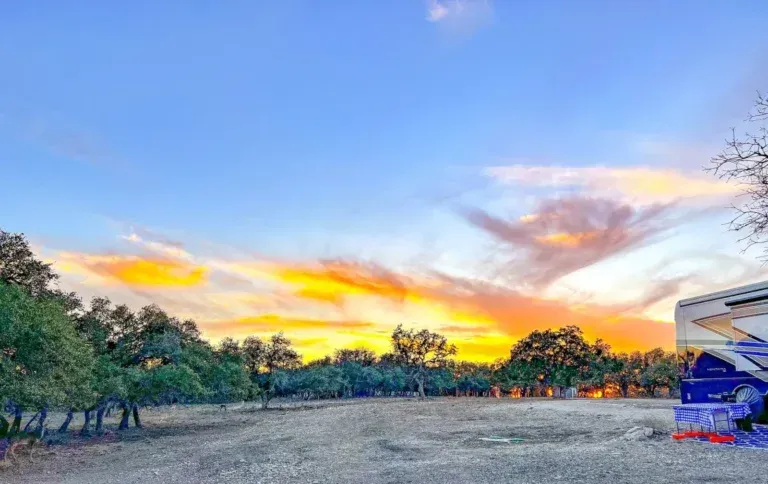
- Unobstructed sky views from every site
- Easy telescope setup on level ground
- View our RV campsites here
Stargazer-Friendly Amenities
Evening Comfort:
- Fire pits for warmth during cool nights
- Covered pavilion for group stargazing events
- Hot tub under the stars
- BBQ facilities for sunset dinners before stargazing
Practical Features:
- On-site store with essentials
- Quiet hours enforced for optimal stargazing
- Wi-Fi available for astronomy apps and weather updates
Planning Your Stargazing Visit
Best Viewing Conditions
Moon Phases:
- New moon (plus or minus 3 days): Darkest skies for faint object viewing
- First/Last quarter: Good compromise for viewing planets and bright objects
- Full moon: Excellent for lunar photography and illuminated landscape shots
Weather Considerations:
- Check Clear Sky Chart Check Clear Dark Sky for detailed forecasts
- Avoid nights with high humidity or approaching weather fronts
- Best months: April through October for consistently clear skies
- Backup plans: Indoor astronomy activities during cloudy weather
Reservation Information
Booking Details:
- Advanced reservations recommended especially during meteor shower peaks
- Contact: 830-866-3442
- Website: Cowboys and Angels Retreat
- Special rates available for astronomy groups and extended stays
Group Events:
- Astronomy club gatherings welcome
- Educational workshops can be arranged
- Photography meetups supported with group rates
- Family stargazing events throughout the year
Educational Resources and Further Learning
Recommended Reading
- “National Geographic Backyard Guide to the Night Sky“
- “Turn Left at Orion” by Guy Consolmagno“
- “Astrophotography” by Thierry Legault“
- Local astronomy club newsletters and publications
Online Resources
- Cowboys & Angels Retreat blog for site-specific updates
- International Dark-Sky Association for dark sky preservation
- American Meteor Society for meteor shower predictions
- NASA’s sky viewing tools for current celestial events, such as Nasa’s Eyes, ViewSpace, Skyview, JPL Education Resources, Space Telescope Live, and Hubble to name a few.
Local Astronomy Community
- Hill Country astronomers often visit our property
- San Antonio Astronomical Association hosts events in the region
- Austin Astronomical Society members frequently visit
- Photography groups regularly organize Milky Way shoots
Nearby Attractions for Extended Stays
Additional Stargazing Locations
- Enchanted Rock State Natural Area (30 minutes) – Another excellent dark-sky site
- Lost Maples State Natural Area (45 minutes) – Combine fall foliage with stargazing
Daytime Activities
- Historic Kerrville shopping and dining
- Hill Country wineries and breweries
- Guadalupe River activities and state parks
- Local museums and cultural attractions
- Antique shopping in nearby towns
- View our page on nearby attractions
Stargazing Etiquette and Safety
Dark Sky Preservation
Light Discipline:
- Use red flashlights only during stargazing hours
- Shield all light sources to prevent sky glow
- Turn off vehicle headlights well before stargazing areas
- Close curtains in cabins to prevent light pollution
Community Guidelines:
- Quiet hours after 10 PM for serious observers
- Respectful telescope sharing when appropriate
- Wildlife awareness – don’t disturb grazing deer or other animals
- Leave no trace principles apply to all stargazing activities
Safety Considerations
Night Vision Safety:
- Allow 20-30 minutes for full dark adaptation
- Move slowly in dark conditions
- Know your surroundings before full darkness
- Carry cell phone for emergencies (airplane mode to preserve dark skies)
Weather Awareness:
- Monitor weather conditions for sudden changes
- Dress in layers for temperature fluctuations
- Stay hydrated during extended viewing sessions
- Have indoor backup plans for inclement weather
Conclusion: Your Gateway to the Universe
Cowboys & Angels Retreat represents the gold standard for astronomy camping in Texas, combining exceptional dark skies in the Texas Hill Country with comfortable cabins and RV campsites. Here, under some of the darkest skies in Texas, you’ll discover celestial wonders that have inspired humanity for millennia. Whether you’re photographing the Milky Way’s delicate structure, witnessing a meteor shower’s cosmic fireworks, or simply lying on a blanket counting satellites, our Bortle 3 skies provide the perfect canvas for astronomical wonder.
From the comfort of our western-themed cabins to the excitement of a Perseid meteor shower peak, every night offers new possibilities for cosmic discovery. Our unique combination of exceptional dark skies, modern amenities, and authentic Texas Hill Country charm creates an unparalleled stargazing destination where memories are made and the universe feels close enough to touch.
Book your astronomical adventure today and discover why Cowboys & Angels Retreat is quickly becoming the Southwest’s premier stargazing destination. Under our pristine dark skies, every night is an invitation to explore the infinite, and every dawn brings new appreciation for our place in the cosmic story.
The stars are waiting. Your adventure begins the moment you look up.
Ready to experience the magic? Contact Cowboys & Angels Retreat at 830-866-3442 or visit our website to reserve your spot under some of America’s darkest skies.
FAQ
Why is the Texas Hill Country so good for stargazing?
The Texas Hill Country offers low light pollution, wide-open skies, and minimal urban glow, making it ideal for viewing stars, planets, and seasonal constellations. On clear nights, you can often see the Milky Way with the naked eye, especially during spring and summer.
What can you see while stargazing at Cowboys and Angels Retreat?
Depending on the season and moon phase, guests can see the Milky Way, meteor showers, major constellations, and bright planets like Jupiter and Saturn. While portions of the Milky Way are visible for much of the year, the best viewing of the bright Galactic Core happens during the summer months when it rises higher in the night sky.
Do I need a telescope to enjoy stargazing?
No. Many of the most impressive celestial sights — including constellations, meteor showers, and the Milky Way — are visible without equipment. Binoculars can enhance the experience, but beginners can enjoy the night sky with just their eyes and a blanket.
When is the best time of year for stargazing in Texas?
Stargazing is possible year-round, but the best conditions occur on clear, moonless nights. Spring and summer are ideal for viewing the Milky Way, while fall and winter offer crisp air and bright seasonal constellations.
How can beginners get started with stargazing?
Start by choosing a dark location away from artificial light. Allow your eyes 20–30 minutes to adjust, avoid phone screens, and use a simple stargazing app or printed star chart to identify constellations. If you’re new to the night sky, read our Beginner’s Guide to Stargazing in the Texas Hill Country for step-by-step tips and equipment recommendations.
Recent Posts